Wiping, Showering, or Brushing: Gentle Ways to Clean Houseplant Leaves
Leaves collect dust, cooking grease and tiny pests. A clean leaf can photosynthesize more efficiently, look healthier and be less attractive to pests. For beginners, three gentle approaches work well: wiping individual leaves, giving plants a gentle shower, or brushing/dusting with a soft tool. Below we compare the methods, explain when to use each, and finish with a short repeatable routine you can follow at home.
Comparing three cleaning approaches
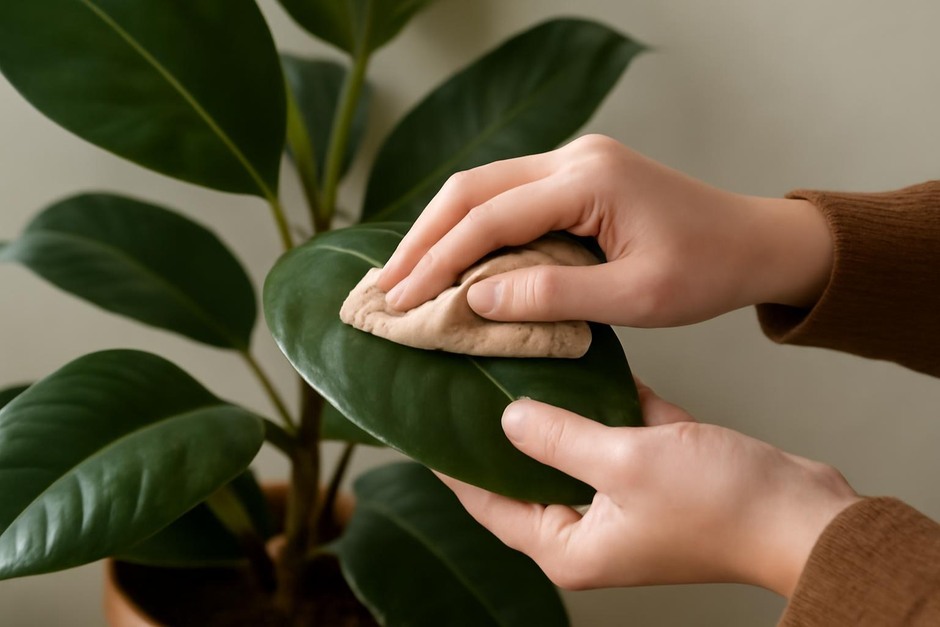
1. Wiping leaves with a soft cloth
What it is: Using a damp, soft cloth or sponge to gently wipe the surface of each leaf.
- Best for: Medium to large glossy leaves (rubber plants, monstera, fiddle-leaf fig).
- Pros: Precise; lets you inspect leaves closely for pests, damage, or disease. Requires little water.
- Cons: Time-consuming for many small-leaved plants; not ideal for fuzzy leaves (which can be damaged).
How to do it: Use lukewarm water and a soft, lint-free cloth. Support the underside of the leaf with one hand while you wipe with the other. Move from the stem outward to avoid pressure on the petiole. For stubborn grime, add a drop of mild soap, then rinse the soap off with a second damp cloth.
2. Giving plants a gentle shower
What it is: Running water over the plant—either in the sink, shower, or outside—so loosened dust washes away.
- Best for: Plants with many small leaves (pothos, philodendron) and large outdoor-tolerant houseplants. Also useful when many plants need cleaning.
- Pros: Fast for multiple plants; reaches leaf undersides; rinses away soap and pests.
- Cons: Risk of cold or chlorinated water shock; soil can wash out of pots if not protected; not suitable for very fragile or hairy-leaved plants.
How to do it: Use lukewarm water and a gentle spray setting. Tilt pots slightly so water drains freely without saturating nearby surfaces. Allow plants to drain thoroughly before returning them to their normal spot. If concerned about mineral residue, use filtered water occasionally or let tap water sit in a watering can overnight.
3. Brushing or dusting with a soft tool
What it is: Using a soft brush, paintbrush or feather duster to remove dust without wetting the plant.
- Best for: Fuzzy or delicate leaves (African violets, lamb’s ear) and very small-leaved plants.
- Pros: Gentle and quick; avoids wetting sensitive leaves that may rot or develop spots.
- Cons: Less effective on greasy residues or sticky pest secretions; does not rinse away pests.
How to do it: Use a clean, soft-bristled brush and sweep leaves lightly. For plants with a dense canopy, open the branches gently to reach inner leaves. Follow brushing with a mindful inspection for pests.
How to choose between the methods
Start by observing three factors: leaf texture, plant size/structure and presence of pests or residues.
- Leaf texture: Glossy leaves tolerate wiping; fuzzy or velvety leaves prefer brushing to avoid flattening fibers. Thin, delicate leaves can tear if wiped roughly.
- Plant size and number: One or two large-leaved plants are easy to wipe. A shelf of small-leaved plants is faster to rinse in a shower or wipe selectively.
- Pest or residue signs: Sticky residues, visible mites, or aphids are best addressed with water to wash pests away; wiping or washing with a mild soap can help. Dust alone may be cleared with brushing.
Also consider your environment. If your tap water is very hard, brief wiping or brushing might be preferable to frequent showers. If your plants tolerate occasional wetting and you have a grouping that needs the same care, a shower can be efficient.
A short, repeatable routine for beginners
Keep this simple schedule to maintain clean leaves without overwhelm.
- Weekly, 5-minute check: Walk through your plants. For each, do one quick action: brush dusty leaves, wipe one or two large leaves, or run a brief spray over an overgrown pot. Use this as a pest inspection too.
- Monthly, 15–30 minute clean: Choose a method based on the plant: wipe glossy leaves, shower many small-leaved plants, brush fuzzy ones. Rotate plants that need deeper cleaning so you don’t handle everything every month.
- After cooking or renovations: If a thin layer of grease or heavy dust settles, plan a targeted wipe or rinse for the affected plants.
Final tips: Always test a single leaf when trying a new method. Support leaves while wiping. Avoid cold water and never use harsh chemicals. With a few minutes each week and a more thorough monthly session, your houseplants will remain cleaner, healthier and more attractive without extra fuss.